Assisted Living vs. Independent Living vs. Nursing Homes: Deciphering Senior Care Options
Business Name: BeeHive Homes of Volcano Cliffs
Address: 6230 Montaño Rd NW, Albuquerque, NM 87120
Phone: (505) 302-1919
BeeHive Homes of Volcano Cliffs
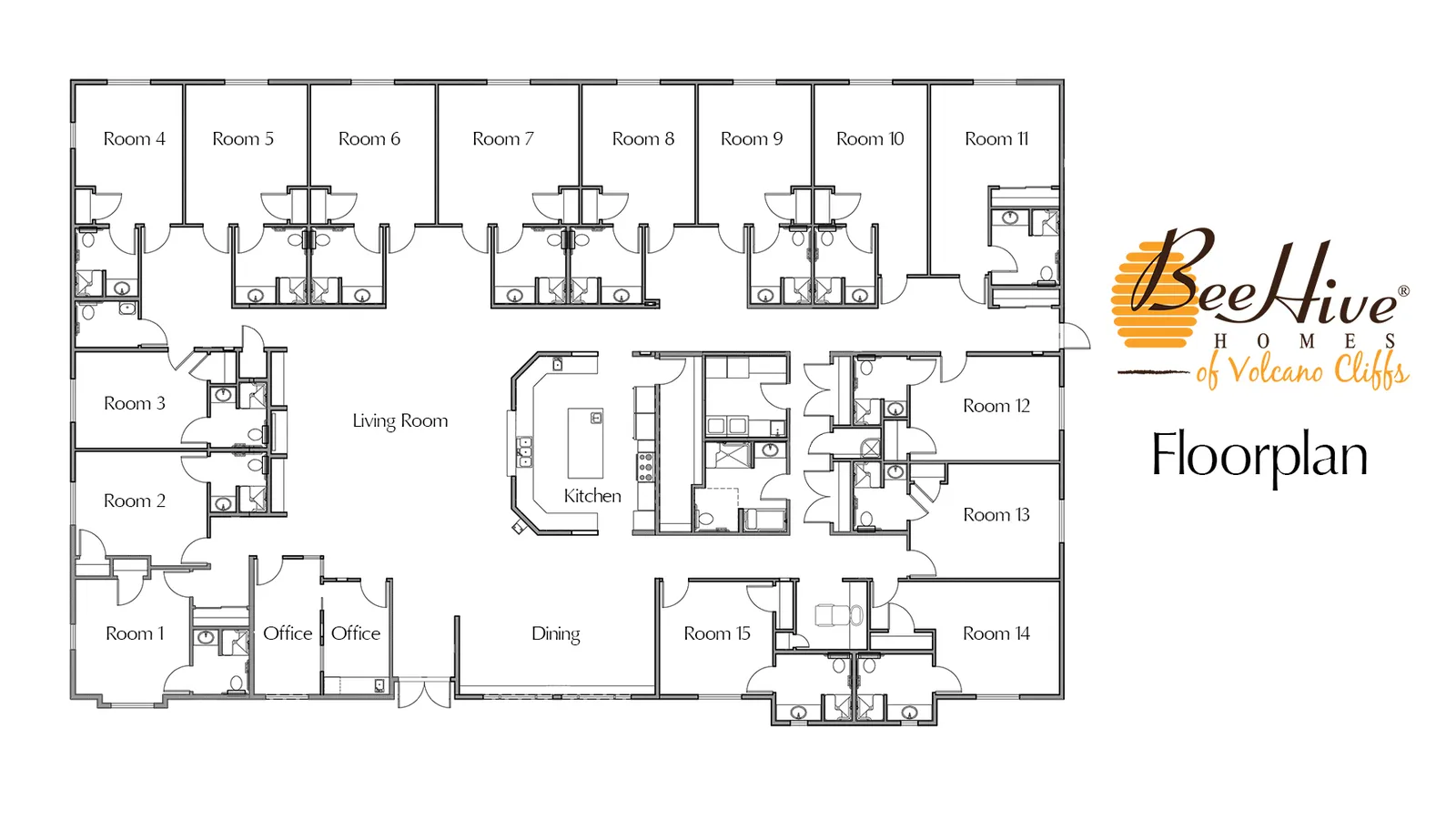
At BeeHive Homes of Volcano Cliffs, New Mexico, we offer the finest assisted living experience available in a cozy, comfortable homelike setting. Each of our residents has their own spacious room with an ADA approved bathroom and shower. We prepare and serve delicious home-cooked meals three times a day every day. We maintain a small, friendly elderly care community. We provide regular activities that our residents find fun and contribute to their health and well-being. Our staff is attentive and caring and provides assistance with daily activities to our senior living residents in a loving and respectful manner. We would like to invite you to tour and experience our assisted living home and feel the difference.
6230 Montaño Rd NW, Albuquerque, NM 87120
Business Hours
Families hardly ever begin looking into senior care on a calm Tuesday with plenty of time to believe. More frequently, the search starts after a fall, a hospitalization, or a slow awareness that every day life is becoming harder than it must be. The terms sound comparable, the brochures all look assuring, yet the distinctions in between assisted living, independent living, nursing homes, and even respite care are considerable and can impact security, cost, self-respect, and quality of life.
I have sat with families around kitchen area tables where brother or sisters argued over what "self-reliance" actually implied for their father. I have enjoyed residents flourish when moved to the ideal level of care a couple of months previously than they wanted. I have actually also seen the damage when someone stays in the incorrect setting just due to the fact that no one wished to have a tough conversation.
This guide is indicated to help you translate the choices, comprehend the real trade‑offs, and acknowledge when each type of senior care makes sense.
Starting with the person, not the building
Before you compare building types, begin with the actual individual: their routines, health conditions, character, and choices. The exact same building can be a best suitable for someone and a miserable mismatch for another.
Three concerns guide most great choices in elderly care:
- What does a common day look like now, and where are the pain points or security risks?
- What medical or cognitive conditions exist today, and how stable are they?
- How likely is change in the next one to three years, and how quick could things deteriorate?
A proud, extremely social 80‑year‑old with arthritis who handles medications well is a different case than a 78‑year‑old with mild dementia who lives alone and in some cases forgets the range. Both might state, "I'm fine in your home," but their risk profiles are not the same.
Only as soon as you have a clear image of the individual does the terminology of independent living, assisted living, and nursing homes end up being useful.
Independent living: flexibility with a safety net
Independent living neighborhoods are created for older adults who can manage most or all activities of daily living by themselves, however who desire less home maintenance and more social contact. They frequently appear like apartment building, beehivehomes.com elder care condos, or homes clustered around shared dining and activity spaces.
Typical features include housekeeping, one or two daily meals in a communal dining room, transport to consultations, and a busy calendar of social events and getaways. Personnel might exist all the time, but mainly for hospitality, not hands‑on care.
Independent living fits best when a person:
- Can bathe, gown, toilet, and move independently or with minimal assistive devices
- Manages medications without routine reminders
- Has stable chronic conditions (for example, well‑controlled diabetes or high blood pressure)
- Is cognitively intact or only mildly impaired without unsafe behaviors
- Feels isolated or overwhelmed by home maintenance but not hazardous alone
The trade‑off is that independent living provides restricted direct care. Some communities use add‑on services through home care companies that can assist with bathing or medications in the resident's apartment. These can bridge the gap when requirements are light but increasing.
I as soon as worked with a retired instructor who moved to independent living after her other half passed away. She was physically capable however lonesome and tired of preserving a large home. Within months, her blood pressure improved and her medication adherence stabilized, not due to the fact that the structure supplied healthcare, however because she consumed much better, strolled more with pals, and felt engaged again. For her, the "care" came indirectly through lifestyle changes.
However, I have actually also seen families position a parent with advancing dementia in independent living due to the fact that the parent refused any "care" label. Within weeks there were reports of roaming, misplaced medications, and cooking area events. Personnel were courteous however clear: independent living was not created or certified to manage that level of danger. A 2nd relocation ended up being inevitable, this time with much more distress.
Assisted living: assistance with daily life, social structure, and some supervision
Assisted living beings in the middle of the care spectrum. Citizens live in personal or semi‑private homes but get aid with everyday tasks and routine oversight from care staff. The objective is to preserve as much self-reliance as possible while reducing threat and burden.
Assisted living is suitable when somebody:
- Needs assist with several activities of daily living such as bathing, dressing, grooming, or toileting
- Requires medication suggestions or management
- Has mobility difficulties and is at greater danger of falls
- Shows moderate to moderate cognitive modifications, however not harmful behaviors that need 24‑hour nursing care
- Benefits from having staff frequently check in, however does not require continuous one‑on‑one supervision
Daily life in assisted living normally includes three meals, housekeeping, laundry, social activities, and set up transportation. The care group produces a strategy describing what assistance is needed and how frequently. Some locals just get early morning and evening assistance, while others need help throughout the day.
From an insider's viewpoint, the quality of an assisted living neighborhood is less about the chandelier in the lobby and more about 3 operational details:
- Staffing ratios and stability. High turnover typically signifies much deeper problems.
- How quickly personnel respond to call buttons and requests.
- How the neighborhood manages changes in condition, such as a resident who begins falling or becomes more confused.
I keep in mind a resident in assisted living who at first just required aid with showers two times a week and tips for night medications. Over two years, arthritis aggravated and she began to require day-to-day dressing help and a walker. Due to the fact that the assisted living group monitored her routinely, they changed her care plan slowly rather of awaiting a crisis. She stayed in that exact same house for four years before a considerable stroke required nursing home care.
Families in some cases presume assisted living is a medical environment. It is not. Many assisted living facilities are not equipped to deal with feeding tubes, complex wound care, or unstable medical conditions. Their licenses and staffing models focus on daily living support, not hospital‑level care.
Nursing homes: treatment and intensive support
Nursing homes, likewise called proficient nursing facilities, provide the greatest level of care outside of a healthcare facility. They are appropriate for people who require 24‑hour nursing guidance, complex medical treatments, or substantial support with essentially all daily activities.
Residents in nursing homes might be recovering from significant surgical treatment, strokes, or major infections. Others have actually advanced chronic conditions, such as cardiac arrest or late‑stage dementia, that make living in a less supervised environment unsafe.
Nursing homes vary from assisted living and independent living in several crucial methods:
- They needs to have certified nurses on responsibility around the clock.
- They offer competent services, such as IV medications, injury care, post‑surgical rehab, and complex medication regimens.
- They often coordinate closely with doctors, therapists, and hospitals.
- The environment feels more medical, with shared spaces more typical and personal privacy sometimes compromised.
Some individuals remain in nursing homes only short‑term for rehabilitation after a hospital stay. Others live there long‑term since their needs can not be securely met elsewhere. It is not unusual for someone to move from home to the medical facility after a crisis, then to a nursing home for rehabilitation, and ultimately to assisted living once they stabilize.
Families often have a hard time mentally with the concept of a nursing home, picturing only the worst facilities they have actually become aware of. The reality is differed. I have seen thoughtful, well‑staffed nursing homes where homeowners and households felt supported and heard, and others where extended staffing made fundamental tasks feel rushed. Due diligence matters.
Where respite care fits in
Respite care refers to short‑term stays or services developed to provide family caretakers a break. It can take lots of kinds: a weekend in assisted living, a few weeks in a nursing home for rehabilitation and guidance, or day-to-day visits to an adult day program.
This kind of senior care is typically underused since families feel guilty or believe they need to "manage" by themselves. In practice, respite care can avoid burnout, lower hospitalizations, and extend the amount of time an individual can securely remain at home.
Common factors households utilize respite care include caretaker fatigue, a prepared surgical treatment or journey for the main caregiver, or a trial duration to see how a loved one adjusts to a new environment. Numerous assisted living and nursing home neighborhoods use furnished respite spaces so someone can remain anywhere from a few days to a number of months.
I as soon as dealt with a child caring for her mother with advancing dementia in your home. She resisted respite, insisting she might handle everything, up until she landed in the healthcare facility with pneumonia. Her mother moved into a respite bed in assisted living while the daughter recovered. Both ended up benefiting. The child understood just how much 24‑hour caregiving had actually drawn from her, and her mother took pleasure in the structured activities and social contact. After a 2nd scheduled respite stay, the family decided to make assisted living permanent.
Respite care can likewise belong to planned transitions. A person may start with short stays in assisted living, get comfy with personnel and routines, and eventually move in full‑time when home life becomes too difficult.
Side by‑side contrast: what actually changes from one level to the next
Families frequently desire an easy way to compare choices without checking out lots of sales brochures. The following table lays out common differences, but keep in mind that local regulations and neighborhood policies can move the details.
|Element|Independent living|Assisted living|Nursing home|| ------------------------------|------------------------------------------|---------------------------------------------------|-----------------------------------------------|| Primary focus|Way of life, socializing, convenience|Daily living assistance, guidance, social life|Healthcare, rehab, complicated support|| Care staff on site|Limited, typically non‑medical|Care assistants, medication techs, some nurse oversight|Nurses and aides 24/7|| Assist with ADLs|Rare or via external home care|Yes, based upon care plan|Comprehensive, typically with many ADLs|| Medication management|Resident self‑manages or external assistance|Personnel manage or monitor|Staff handle nearly completely|| Medical intricacy managed|Low|Low to moderate|Moderate to high, complicated conditions|| Common resident profile|Independent, socially active|Requirements some physical or cognitive support|Frail, clinically intricate, or innovative dementia|| Length of stay pattern|Several years, may move when needs grow|Several years, might transition to nursing home|Short‑term rehabilitation or long‑term high‑need care|
The key is to match existing and near‑future requirements to the right column. Someone with slowly progressive Parkinson's might start in independent living, relocate to assisted living as movement and care needs increase, and later on require a nursing home if swallowing or breathing issues arise.
Costs, agreements, and covert monetary traps
The financial side of elderly care is frequently more complicated than the care itself. The same regular monthly cost can suggest very different things depending upon what is included.
Independent living typically charges regular monthly rent plus optional services. Meals, housekeeping, and fundamental transport are typically consisted of, while extra help, if available, costs more. Medical insurance hardly ever spends for independent living because it is not categorized as medical care.
Assisted living typically involves a base rate covering real estate, meals, and fundamental services, plus a care cost based upon the level of support needed. That care charge can rise as requirements increase. Households sometimes choose a setting that is cost effective at the most affordable care level but struggle as soon as the care plan is upgraded and monthly costs jump. Long‑term care insurance may help if the policy covers assisted living and certain criteria are met.
Nursing homes have a different model. Short‑term rehabilitation after hospitalization might be partly or completely covered by public or private insurance under specific conditions, generally for a minimal variety of days. Long‑term custodial care is frequently paid out of pocket until an individual receives need‑based public protection. Financial rules can be complex, and missteps in preparing for nursing home care can have long‑term consequences for a spouse still living at home.
Whenever families tour communities, I motivate them to ask one basic however revealing concern: "Show me 3 genuine examples, with names removed, of how your rates changed in time for residents whose care requirements increased." Communities that can stroll you through sample histories usually have a more transparent approach.
Safety, autonomy, and dignity: the three‑way balancing act
Every senior care setting grapples with the exact same triangle: security, autonomy, and self-respect. You can push hard in one instructions, however the other corners move.
Independent living prefers autonomy and dignity. Residents lock their own doors, handle their own regimens, and decline activities they do not enjoy. That liberty comes with more threat. Somebody may fall in their house and not be discovered best away.
Nursing homes lean heavily into security. Bed alarms, frequent checks, and structured routines minimize danger however can feel limiting. For some citizens, that level of oversight is not just proper but needed. For others, it might feel like excessive control.
Assisted living attempts to being in the middle, which causes lots of nuanced choices. Should a resident who loves walking outdoors be enabled to go out alone if they sometimes forget their method back, or should staff demand an escort? There is no single right response. Families, locals, and personnel must negotiate these decisions based on danger tolerance, legal requirements, and quality of life.
I typically inform households that outright security is neither practical nor gentle. The objective is "affordable security" lined up with the individual's worths. A previous farmer who spent his life outdoors might truly prefer a small threat of falling on a garden course to ideal safety in a recliner chair. Listening to his story matters.
When to think about a modification in level of care
Most families postpone shifts longer than is ideal. They hope things will stabilize or enhance. Often they do, but chronic conditions typically advance. Early, thoughtful moves often produce much better results than emergency movings after a crisis.
Watch for these signs that the present setting might no longer be proper:
- Frequent falls, near‑misses, or brand-new mobility problems that existing support can not address
- Medication mistakes, missed out on doses, or confusion about regimens, even with reminders
- Worsening incontinence that overwhelms present staffing or home caregivers
- Uncontrolled roaming, exit‑seeking, or habits that put the person or others at risk
- Repeated hospitalizations for preventable issues like dehydration, bad nutrition, or untreated infections
Any single occurrence might be workable. Patterns matter more. When two or three of these signs continue over a couple of months, it is time to ask whether the level of care still matches the level of need.
I dealt with a couple where the other half had moderate dementia and the better half demanded looking after him in your home. Over a year, small occurrences kept accumulating: a pot left on the stove, a nighttime wandering episode, a minor automobile accident. Each event alone appeared "handleable." Together, they told a various story. By the time he relocated to assisted living, his requirements were closer to what a nursing home might deal with, and the modification was harder. If they had actually moved a year previously, he likely could have remained in assisted living much longer.
A practical structure for households facing a decision
When families feel overloaded, a structured conversation can cut through the feeling. I typically suggest they sit together and quickly write down responses to a few concentrated concerns:
- What can our loved one do independently today, without help or prompts, across bathing, dressing, toileting, strolling, consuming, and taking medications?
- What are the top three threats that fret us the most, based on recent occasions, not on hypothetical fears?
- How much hands‑on care are we reasonably able and ready to supply at home over the next year, taking caregiver health and work into account?
- How does our loved one define a life worth living: maximum self-reliance, optimum convenience, staying together as a couple, or something else?
- What financial resources exist, consisting of cost savings, earnings, long‑term care insurance coverage, and potential public programs, and what is the likely time horizon?
This workout does not offer you a cool response, however it clarifies concerns and constraints. A family who finds their biggest fear is "Mom will be alone when she falls once again" is searching for various options than a household whose main top priority is "Dad and Mom must stay together, even if care is made complex."
Working with specialists and trusting your own judgment
Geriatricians, geriatric care managers, social employees, and experienced senior care planners can be important guides. They know how regional communities really operate, beyond what the marketing materials promise. They can identify inequalities between what a household describes and what a specific setting can handle.
At the very same time, households bring knowledge that no professional can match: history, personality, and worths. The very best choices come when clinical insight and household knowledge meet. If an expert highly suggests a higher level of care but your instincts withstand, inquire to walk you through specific event patterns and risks they see. Detail brings clarity.
Walk through communities at different times of day, not simply thoroughly staged tour hours. Notification how staff talk to residents. Listen for rushed interactions versus real rapport. Odor, sound, and environment are all data points in assessing senior care options.
Ultimately, there is no ideal choice, only a finest readily available fit at a specific moment in an individual's life. Assisted living, independent living, nursing homes, and respite care are tools. Used thoughtfully and at the correct time, they can maintain dignity, decrease suffering, and assistance not only older grownups but the families who love them.
BeeHive Homes of Volcano Cliffs provides assisted living care
BeeHive Homes of Volcano Cliffs provides respite care services
BeeHive Homes of Volcano Cliffs supports assistance with bathing and grooming
BeeHive Homes of Volcano Cliffs offers private bedrooms with private bathrooms
BeeHive Homes of Volcano Cliffs provides medication monitoring and documentation
BeeHive Homes of Volcano Cliffs serves dietitian-approved meals
BeeHive Homes of Volcano Cliffs provides housekeeping services
BeeHive Homes of Volcano Cliffs provides laundry services
BeeHive Homes of Volcano Cliffs offers community dining and social engagement activities
BeeHive Homes of Volcano Cliffs features life enrichment activities
BeeHive Homes of Volcano Cliffs supports personal care assistance during meals and daily routines
BeeHive Homes of Volcano Cliffs promotes frequent physical and mental exercise opportunities
BeeHive Homes of Volcano Cliffs provides a home-like residential environment
BeeHive Homes of Volcano Cliffs creates customized care plans as residents’ needs change
BeeHive Homes of Volcano Cliffs assesses individual resident care needs
BeeHive Homes of Volcano Cliffs accepts private pay and long-term care insurance
BeeHive Homes of Volcano Cliffs assists qualified veterans with Aid and Attendance benefits
BeeHive Homes of Volcano Cliffs encourages meaningful resident-to-staff relationships
BeeHive Homes of Volcano Cliffs delivers compassionate, attentive senior care focused on dignity and comfort
BeeHive Homes of Volcano Cliffs has a phone number of (505) 302-1919
BeeHive Homes of Volcano Cliffs has an address of 6230 Montaño Rd NW, Albuquerque, NM 87120
BeeHive Homes of Volcano Cliffs has a website https://beehivehomes.com/locations/volcano-cliffs/
BeeHive Homes of Volcano Cliffs has Google Maps listing https://maps.app.goo.gl/vC78eXZrUYuJ298v9
BeeHive Homes of Volcano Cliffs has Instagram page https://www.instagram.com/beehivealbuquerquewest
BeeHive Homes of Volcano Cliffs has an TikTok page https://www.tiktok.com/@beehivehomesalbuq
BeeHive Homes of Volcano Cliffs won Top Assisted Living Homes 2026
BeeHive Homes of Volcano Cliffs earned Best Customer Service Award 2025
BeeHive Homes of Volcano Cliffs placed 1st for Senior Living Communities 2026
People Also Ask about BeeHive Homes of Volcano Cliffs
What is BeeHive Homes of Volcano Cliffs Living monthly room rate?
Our base rate is $7,100 per month. We do an assessment of each resident's needs upon move-in, so each resident's rate may be slightly higher. However, there are no add-ons or hidden fees. We also charge a one-time community fee of $2,000 at move-in
Does Medicare or Medicaid pay for a stay at Bee Hive Homes?
Medicare pays for hospital and nursing home stays, but does not pay for assisted living. Some assisted living facilities are Medicaid providers, but we are not. We do accept private pay, long-term care insurance, and we can assist qualified Veterans with approval for the Aid and Attendance program
Do we have a nurse on staff?
We do have a nurse on contract who is available as a resource to our staff but our residents' needs do not require a nurse on-site. We always have trained caregivers in the home and awake around the clock
What can you tell me about the food at Bee Hive?
You have to smell it and taste it to believe it! We use dietitian-approved meals with alternates for flexibility, and we can accommodate needs for different texture and therapeutic diets. We have found that most physicians are happy to relax diet restrictions without any negative effect on our residents
Do we allow pets?
We do allow small pets as long as the resident is able to care for them. State regulations also require that we have evidence of current immunizations for any required shots
Where is BeeHive Homes of Volcano Cliffs located?
BeeHive Homes of Volcano Cliffs is conveniently located at 6230 Montaño Rd NW, Albuquerque, NM 87120. You can easily find directions on Google Maps or call at (505) 302-1919 Monday through Sunday 10:00am to 7:00pm
How can I contact BeeHive Homes of Volcano Cliffs?
You can contact BeeHive Homes of Volcano Cliffs by phone at: (505) 302-1919, visit their website at https://beehivehomes.com/locations/volcano-cliffs/ or connect on social media via Instagram Facebook or TikTok
Visiting the Mariposa Basin Park offers expansive green space and recreational opportunities that can provide enjoyable outings for individuals receiving Assisted living memory care senior care elderly care and respite care.